“As the saying goes, “ignorance is bliss,” and indeed, the ignorance of the colonization and continued occupation of Hawaiʻi has been a privilege to settlers in Hawaiʻi.” - S. Matsuda and K. Komeiji https://www.uproot.space/komeiiji-matsuda
In Leeward’s new mission, the college affirms its “special commitment to Native Hawaiians.” One of the pillars of the new strategic plan is Native Hawaiian Place of Learning. The stated vision of this pillar is to “[c]reate a visible and celebrated connection to the ʻāina (land) for the betterment of Hawai‘i’s indigenous people and all campus community members.”
Why does Leeward have a special commitment to Native Hawaiians?
What is the role of non-indigenous people (settlers) in supporting indigenization and Native Hawaiians?
The panelists (Eiko Kosasa, Annemarie Paikai, and Wayde Oshiro) will discuss difficult knowledge, i.e., U.S. imperialism and settler colonialism in Hawaiʻi, and connect these forms of conquest and domination to present-day Leeward Community College. The panelists will describe their experiences participating in an ad hoc learning community last summer. They will share their plan to create a learning community that will bring together faculty and staff in a safe and supportive environment where they can educate themselves on the legacy of settler colonialism and identify ways to support indigenization efforts at Leeward.
Difficult Knowledge: U.S. Imperialism and Settler Colonialism in Hawaiʻi
“As the saying goes, “ignorance is bliss,” and indeed, the ignorance of the colonization and continued occupation of Hawaiʻi has been a privilege to settlers in Hawaiʻi.” - S. Matsuda and K. Komeiji https://www.uproot.space/komeiiji-matsuda
In Leeward’s new mission, the college affirms its “special commitment to Native Hawaiians.” One of the pillars of the new strategic plan is Native Hawaiian Place of Learning. The stated vision of this pillar is to “[c]reate a visible and celebrated connection to the ʻāina (land) for the betterment of Hawai‘i’s indigenous people and all campus community members.”
Why does Leeward have a special commitment to Native Hawaiians?
What is the role of non-indigenous people (settlers) in supporting indigenization and Native Hawaiians?
The panelists (Eiko Kosasa, Annemarie Paikai, and Wayde Oshiro) will discuss difficult knowledge, i.e., U.S. imperialism and settler colonialism in Hawaiʻi, and connect these forms of conquest and domination to present-day Leeward Community College. The panelists will describe their experiences participating in an ad hoc learning community last summer. They will share their plan to create a learning community that will bring together faculty and staff in a safe and supportive environment where they can educate themselves on the legacy of settler colonialism and identify ways to support indigenization efforts at Leeward.
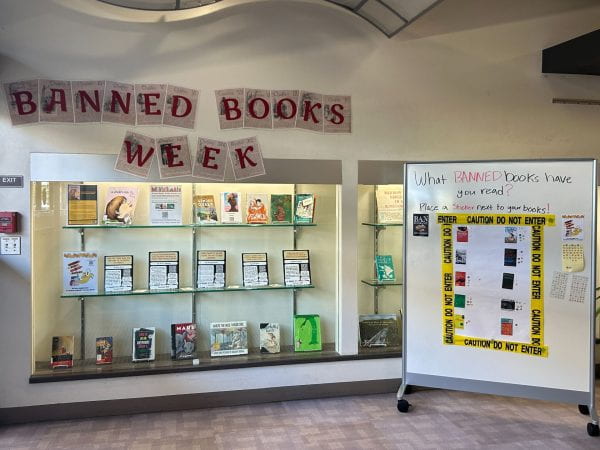
October 1-7 is Banned Books Week. Join us in fighting book bans & censorship!
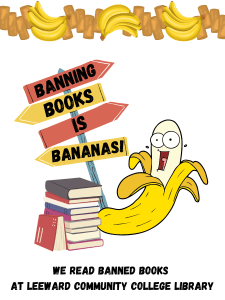
Banning Books is Bananas!
While supplies last! If you . . .
Check out a book in our library
Visit our Banned Books Week display and place stickers next to the banned books you've read
Have a discussion with any of us at the circulation desk about banned books
. . . we will give you a "Banning Books is Bananas!" sticker!
Art by Susan Sammis, student library aide.
Banned Book Reading/Discussion
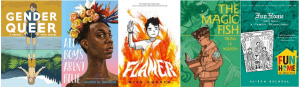
Leeward CC Student Life sent out a poll to students asking them to select one of these banned or challenged books for a campus-wide reading and discussion:
Currently registered Leeward CC students who provide their contact information will enter a drawing for a free Foodland gift card provided by ASUH.
Deadline is 5 p.m., Friday, October 13, 2023
Banned Books Podcast
Leeward CC Student Life asks instruction librarian, Natalie Kahn, about the history of Banned Books Week. Learn about books that have been banned or challenged in the educational system, particularly LGBTQ+ books.
Visit Leeward CC Library's Banned Books Week page at go.hawaii.edu/yKp
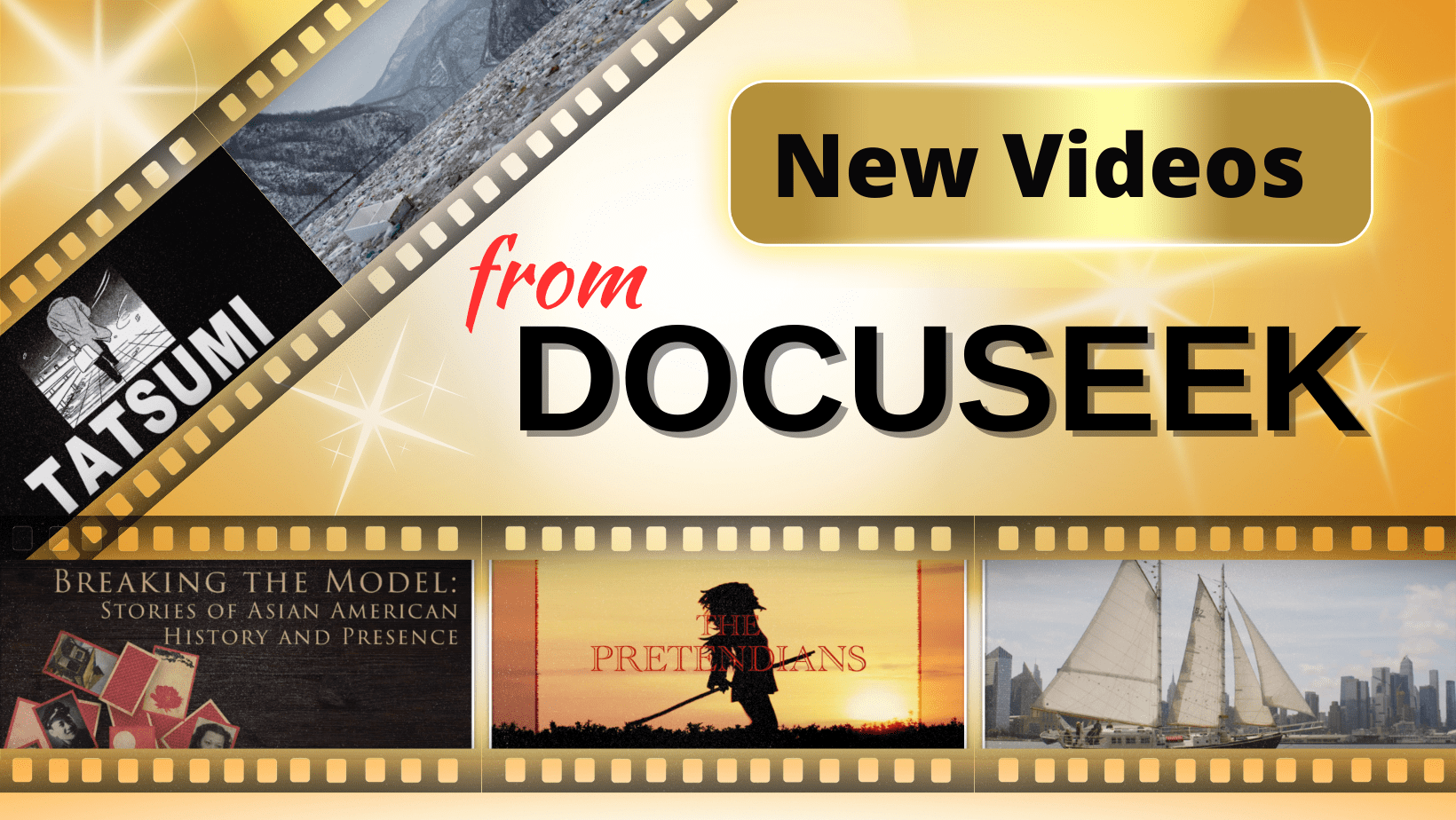
Docuseek continues to add interesting new documentaries to its streaming platform. One of our awesome library student assistants, Izumi Watt, selected and summarized five of these new titles below.
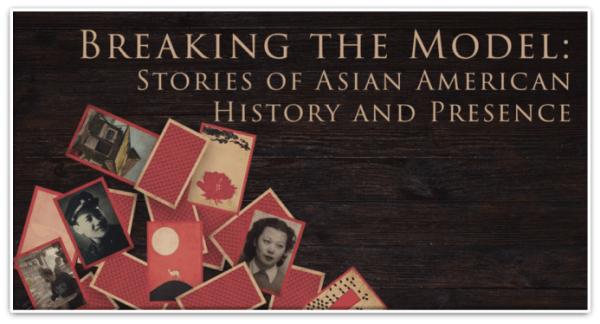
This film combines four short documentaries highlighting stories of immigrants to America from Korea, Cambodia, China, and Japan. The films are: A Portrait of Us, directed by Sarah Park; Conversations at the Register by Brandon Soun and Lan Nguyen; What Remains by Ginger Yifan Chen; and Sincerely Miné Okubo, directed by Yuka Murakami.
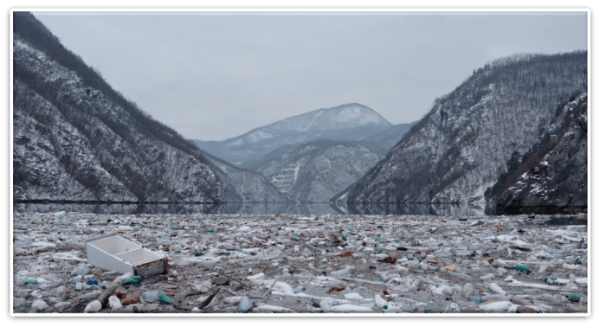
The phrase “Matter Out of Place” refers to any object or impact not native to the immediate environment. Nikolaus Geyrhalter, the director, travels all over the world to put a spotlight on various examples of matter out of place. The documentary focuses on the expanding problem of human-made refuse and the endless struggle to control it.
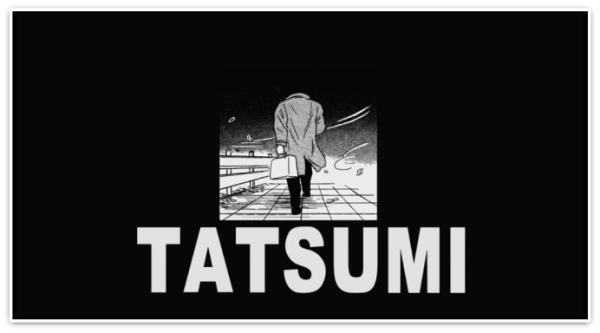
Directed by Eric Khoo, this film shares the life and creations of Yoshihiro Tatsumi, inspired by his book A Drifting Life and five of his iconic stories. Tatsumi’s works follow his experiences with high and low moments in life. His artistic style of gekiga (dramatic pictures) transformed the manga landscape in the mid-1900s.
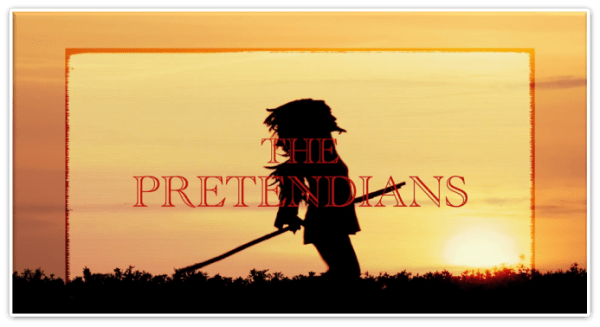
The Pretendians, directed by Paul Kemp with Drew Hayden Taylor, discusses indigenous identity and appropriation of the rights of native people in Canada and the United States. Drew Hayden Taylor, an Anishinaabe author from Curve Lake First Nations, visits gift shops, universities, and reservation gas stations to investigate instances of fraud related to falsely claimed indigenous identity by “Pretend Indians.”
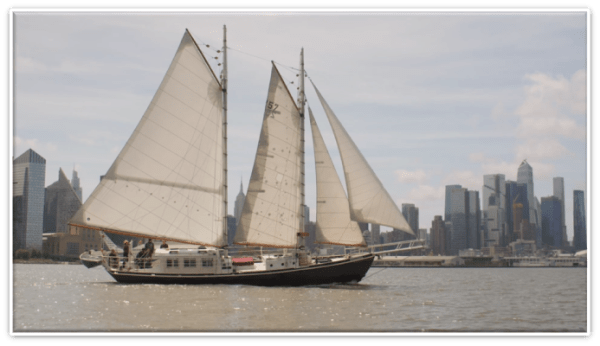
The Apollonia is a schooner, a type of sailing ship with two or more masts. She is captained by Sam Merrett as the crew ships freight up and down the Hudson River. Windshipped, directed by Jon Bowermaster, follows the ship and crew as they revive an age-old method of moving products to cities along the banks of the river. This practice of sail freight attracts businesses interested in sustainable and carbon neutral options for shipping their products.
We hope you find these videos as interesting and informative as we did!
As a reminder, all current Leeward CC faculty, staff and students are welcome to use our streaming video services. When accessing our electronic resources from off campus, you may be prompted to log in with your UH credentials first.
Did you know the Learning Commons and Library has laptops, iPads, computer mice, and other equipment for students to use while on campus?
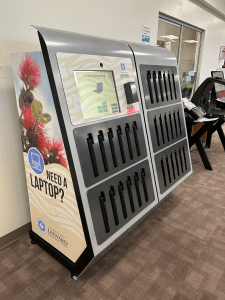
Most of our equipment must be checked out at the circulation desk but students can pick up our 4-hour loan laptops and mobile power units without staff assistance!
4-Hour Loan Laptops
Students can visit our self-service kiosk to check out a laptop for 4 hours. How to check out a laptop:
With a mobile device, open the camera app and scan the QR code on the kiosk
Log in with UH username
Get a passcode
Enter the passcode on the kiosk
If students do not have a mobile device to scan the QR code, the circulation desk staff will assist.
Laptops are for on-campus use. Students must return their laptops to the laptop kiosk and may insert them in any available slot.
Mobile Power Units
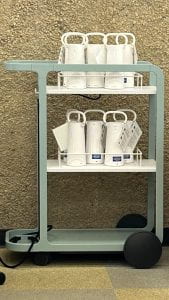
Students can power up their laptops and mobile devices using our portable batteries! We have carts on both floors so students can freely grab a battery and take it wherever they are studying. Specifications:
3 USB-C ports and 1 USB-A port
218 watt-hour capacity
117W of total charging output
Charges up to 4 devices
Batteries can only be used in the Learning Commons and Library. After using, they must be returned to their carts to recharge. The USB ports cannot be used to recharge the batteries.
For all other equipment, students must book items at go.hawaii.edu/PJP and pick them up at the circulation desk. Only current Leeward CC students may check out mobile devices and accessories. A photo ID is required.
As the old saying goes, history tends to repeat itself. Maybe as a farce. Or perhaps only if you failed to learn from it the first time.
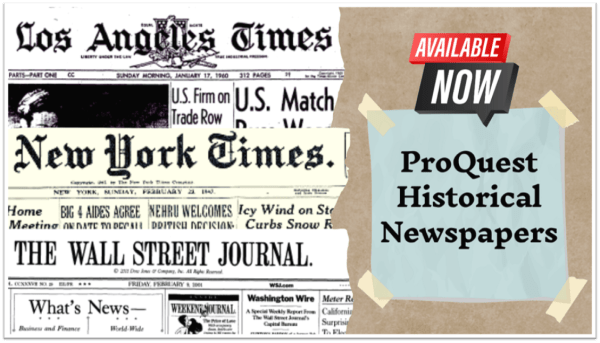
In any case, we now have additional resources to help us unravel this mystery! Through a UH system-wide license, the Leeward CC community has gained access to 3 historical newspaper archives from ProQuest: The Wall Street Journal (1889-2011), Los Angeles Times (1881-2014), and The New York Times (1851-2019).
To get started, visit our A-Z Databases page and find your newspaper in the alphabetical list, or search for it in our Primo library catalog. If you are off campus, you may be prompted to enter your UH username and password before being granted access. Once you are in the database, it is easy to search the full text, or browse by issue date. You may view and download articles or full pages in PDF format.
Our coverage of the Los Angeles Times goes all the way back to the very first issue in 1881. Here's an interesting article from January 17, 1960 about the impact of a writers' guild strike on the television and film industries:
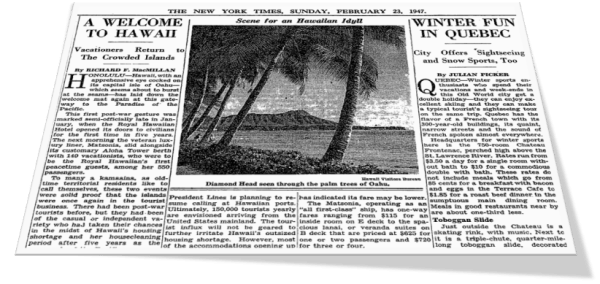
The New York Times archive dates back to antebellum times, so you're sure to strike a goldmine of history. This article from February 23, 1947 details Hawaiʻi's reopening to tourism after the trauma of World War II:
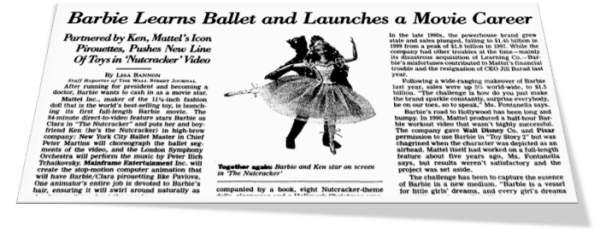
The Wall Street Journal has been an important source for business and financial news for over 130 years. Our coverage goes back to the beginning, but you can also find more recent articles, such as this February 9, 2001 story about Barbie's big break:
Wait a second . . . an impactful writers' strike? Hawaiʻi's reopening to tourism, following a major worldwide crisis? A Barbie movie? Maybe it IS true that history repeats itself!
If history isn't your thing, don't forget that we also have recent newspaper coverage (including stories from the Honolulu Star-Advertiser) through ProQuest US West Newsstream. In addition, all current Leeward faculty, staff and students are welcome to sign up for a free New York Times group pass. Once registered, you will have access to news, Cooking, and Wirecutter product reviews on NYTimes.com for one year (renewable).
Past or present, weʻve got you covered!
Academic Services Retreat/Learning Commons Staff Development Services will not be available Wednesday, August 2, 2023. Learning Commons staff will be engaged in staff development activities.
Sama Sama will be available, so come on in for your boba fix!
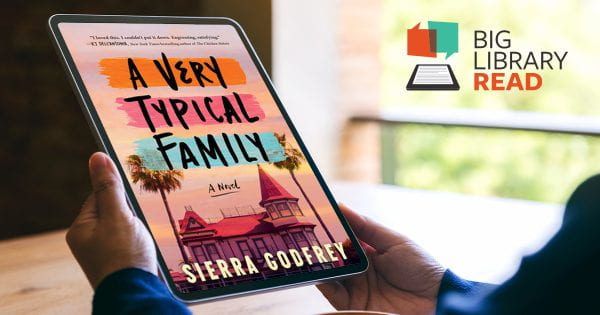
The Big Library Read, hosted by OverDrive, comes but thrice a year. If you've been wanting to join in on the fun, you're in luck! The summer Big Library Read is happening NOW, July 13-27, 2023.
Billed as "the first global ebook club," the Big Library Read offers one title, free of charge, to OverDrive users around the world. This summer's selection is A Very Typical Family by Sierra Godfrey.
About the book
Natalie Walker is the reason her older brother and sister went to prison over 15 years ago. She fled California shortly after that fateful night and hasn’t spoken to anyone in her family since. Now, on the same day her boyfriend steals her dream job out from under her, Natalie receives a letter from a lawyer saying her estranged mother has died and left the family’s historic Santa Cruz house to her. Sort of. The only way for Natalie and her siblings to inherit is for all three adult children to come back and claim it—together.
Written with delightfully dark humor and characters you can’t help but cheer for, A Very Typical Family is an uplifting family drama that will have you reveling in the power of second chances.
Accessing the book on OverDrive
Ready to read? Just click on these direct links to access A Very Typical Family on OverDrive:
If this is your first time using OverDrive, you're in for a treat! More than 500 ebooks and 4,700 magazines are available for your reading pleasure. We also have a small (but growing) selection of audiobooks--perfect for making those long commutes a little more bearable.
For reading on the go, be sure to check out OverDrive's mobile app, Libby. Borrow ebooks, audiobooks, and magazines, then read/listen to them right from the app. You may also manage your loans, even across different OverDrive library collections (such as the Hawaii State Public Library System's). Click on the graphic below for a video introduction to Libby.
A discussion board for A Very Typical Family is available, but beware of spoilers! Happy reading!