
The Learning Commons & Library summer hours are:
Monday - Friday, 9am - 3pm Hours subject to change
If you have any questions, please contact us at x210 or lcccirc@hawaii.edu
Leeward Community College

The Learning Commons & Library summer hours are:
Monday - Friday, 9am - 3pm Hours subject to change
If you have any questions, please contact us at x210 or lcccirc@hawaii.edu

Finals Countdown begins Monday, May 4th! To help students de-stress, we've organized a few activities! Please share our event schedule with your students:
For more information, visit our Finals Countdown page at go.hawaii.edu/yTR
In celebration of International Women’s Month, Leeward Community College Library hosted Gender, Tradition, and Skin: A Female Batok Practitioner’s Voice at the Waiʻanae Moku Campus, bringing together students, faculty, and community members for an afternoon centered on Indigenous knowledge, gender, and ancestral practice.
The event was a meaningful success, welcoming approximately 20 attendees who gathered to learn from guest speaker Natalia Roxas, a female batok practitioner who shared her lived experience and cultural knowledge surrounding Indigenous Filipino skin-marking traditions. Her talk highlighted batok not only as an art form, but as an intergenerational practice rooted in ancestry, lineage, and identity, also particularly powerful for Filipinos in the diaspora seeking pathways of cultural reconnection.
Across the Pacific, Indigenous tattooing traditions have long served as living archives of history, place, and belonging. Roxas’s presentation emphasized how reclaiming these practices today can forward deeper understandings of family histories and ancestral ties, especially within contemporary contexts shaped by migration and colonial disruption.
The program was spearheaded by Leon Florendo, Associate Professor and Counselor at Waiʻanae Moku, in partnership with Hauʻolihiwahiwa Moniz, Hawaiian and Pacific Resource Librarian at Leeward Library. In conjunction with the talk, the library curated and displayed a selection of books from both the Waiʻanae Moku and Puʻuloa libraries. These materials explored Filipino experiences in the diaspora, Filipino feminist theory, Indigenous Filipino tattoo practices, and Filipino culture within the broader Pacific Islander family, offering participants opportunities to further engage with the themes discussed.

Two custom magnets were also created specifically for the event. One featured historical context about Las Islas de los Pintados, referencing how early European chroniclers described the Philippines after Ferdinand Magellan’s arrival in the early 16th century, when heavily tattooed Indigenous peoples led Europeans to call the archipelago “the Islands of the Painted Ones.” The second magnet showcased a watercolor scene depicting Kahuna Kā Uhi Keliʻi Makua hand-tapping a vision, reinforcing connections between ancestral knowledge, ceremony, and practice. Informational displays also highlighted tattoo traditions across the Pacific, with specific focus on the Philippines, Hawaiʻi, and Samoa, allowing attendees to see both the distinctiveness and interconnectedness of Indigenous tattoo practices across Oceania.

Participants were also invited to enjoy halo-halo, creating space for informal conversation, reflection, and community connection. The gathering affirmed the importance of centering women’s voices, Indigenous expertise, and cultural continuity within academic and community learning spaces.
Gender, Tradition, and Skin: A Female Batok Practitioner’s Voice exemplified how libraries can serve as sites of cultural dialogue, education, and celebration, honoring the enduring connections between skin, story, ancestry, and living Indigenous knowledge.

Leeward Library is excited to announce the expansion of its library instruction offerings to include music-focused research instruction, broadening the ways students engage with ʻike, history, and scholarly resources.
Most recently, Leeward Library partnered with Professor Aamodt to deliver in-depth research instruction for a music course at the Waiʻanae Moku Campus. Two new research modules were developed and presented by Hauʻolihiwahiwa Moniz, Hawaiian and Pacific Resource Librarian, to support students in critically engaging with music as cultural knowledge, history, and lived experience.
The first module explored the history of Hawaiian music, introducing students to a wide range of traditions, including oli (Hawaiian chant), leo kiʻekiʻe (Hawaiian falsetto), kō (a stylized vocal technique emphasizing elongated vowels and sustained notes), and kī hōʻalu (slack key guitar), among many others. Students were also guided through specialized repositories and resources for researching Hawaiian music, lyrics, composers, and the cultural stories and contexts behind musical compositions.
The second module focused on Portuguese music and migration in Hawaiʻi, tracing the arrival of Portuguese communities, primarily from the Azores and Madeira, and the musical traditions they carried with them. Students examined fado, a melancholic working-class music style known for its emotional intensity and themes of longing and saudade. The module also explored the history of the ʻukulele in Hawaiʻi, tracing its development from Portuguese stringed instruments such as the cavaquinho and braguinha. Research repositories centered on Portuguese communities, music, and local histories in Hawaiʻi were shared to support deeper inquiry.
Through these music-centered modules, Leeward Library continues to demonstrate how library instruction can be adapted to discipline-specific learning, connecting students with research tools that honor cultural context, migration histories, and creative expression.
Leeward Library looks forward to continuing to expand the scope of its instructional offerings across disciplines. Faculty interested in developing or requesting a customized library instruction session by Hauʻolihiwahiwa are encouraged to contact her at hmoniz@hawaii.edu.

In celebration of International Women’s Month, Leeward Community College Library invites students, faculty, and community members to a special program at the Waiʻanae Moku Campus exploring Indigenous knowledge, gender, and ancestral practice.
Gender, Tradition, and Skin: A Female Batok Practitioner’s Voice features guest speaker Natalia Roxa, who will share her lived experience and cultural knowledge surrounding batok, an Indigenous Filipino skin-marking tradition. For many generations, communities across the Pacific have practiced Indigenous tattooing as a way to honor ancestors, lineage, and identity. For those in the diaspora, these practices often become powerful pathways for reconnection, offering education not only about cultural traditions, but about family histories and ancestral ties.
This event will take place on Thursday, March 12, from 12:00–1:00 PM, in the Waiʻanae Moku Campus Common Area. Participants are invited to stay afterward and enjoy halo-halo as part of the gathering.
The program is spearheaded by Leon Florendo, Associate Professor and Counselor at Waiʻanae Moku, in partnership with Hauʻolihiwahiwa Moniz, Hawaiian and Pacific Resource Librarian at Leeward Library. In conjunction with the talk, the library will provide educational materials and feature books from its collection highlighting Filipino women and culture.
We warmly invite students, colleagues, and community members to join us for this meaningful conversation centered on women, culture, and the enduring connections between skin, story, and ancestry.
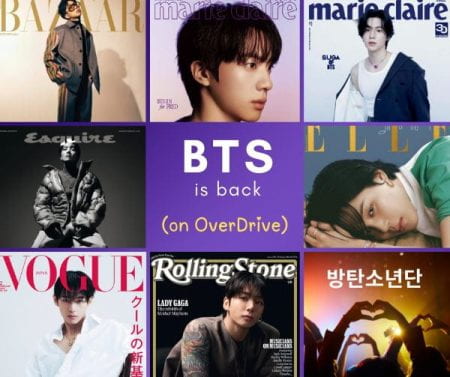
Sad that you didn't score tickets to the upcoming BTS concerts? Well, we've got something even better: OverDrive Magazines! Cheer yourself up by exploring the many BTS-related international magazine issues available to you, without the exorbitant shipping fees. Click on any of the covers below to view the issue on OverDrive.








To read a magazine, just click on the BORROW button and you will be prompted to log in with your UH credentials. There is no limit to the number of magazines you may borrow, and they will be automatically returned after 14 days. You may read the magazine right in your computer browser, or download the free Libby app.
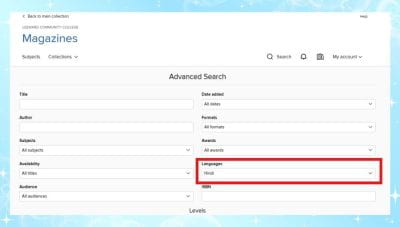
Even if you're not an ARMY (BTS fan), OverDrive has something for you. Magazines are available in many languages, including Japanese, Korean, Chinese, French, Spanish, German, and more. To find magazines in a particular language, go to the Advanced Search and use the Languages filter.
Subject areas include fashion, art, cars, food, entertainment, science, news, sports, and much more. With more than 6,300 titles available, you're sure to find something that piques your interest. Happy browsing!
And if you were lucky enough to score BTS concert tickets, hope to see you in Vegas or LA!
On February 12, 2026, Hauʻolihiwahiwa Moniz, librarian at Leeward Community College, served as a guest speaker for the Indigenous Librarianship course at the University of Alberta’s School of Library and Information Studies. The session was hosted by Professors Lorisia and Kirk MacLeod, whose course examines Indigenous approaches to knowledge organization, stewardship, and library practice.
Moniz’s presentation explored the Nā Mea Kanu Series, a bimonthly library programming initiative she developed at the Kamakakūokalani Center for Hawaiian Studies’ Laka me Lono Resource Center. Nā Mea Kanu is grounded in an innovative Indigenous knowledge organization system designed by Moniz that centers Hawaiian religious and ecological frameworks. The system organizes library collections, programming, and related cultural activities through akua (Native Hawaiian gods), their kino lau (body and elemental forms), and associated ʻike (knowledge domains), offering an alternative to Western classification models.
Through this framework, patrons are able to engage library materials relationally, connecting texts, archival resources, plants, seasons, and cultural practices, rather than encountering collections as disconnected subjects. The Nā Mea Kanu Series extends this system into experiential programming, supporting deeper access, cultural literacy, and community engagement within the library.
The presentation also situated this work within broader Indigenous librarianship discourse. It complemented an international, Mellon Foundation–funded research project for which Moniz served as Principal Investigator. That project documented contemporary Indigenous librarianship practices and environments across 40 Indigenous communities globally, representing the first major primary-data study in the field that moved beyond single case studies.
Students have engaged with the global study over the course of the semester. To read this study please visit:
https://scholarspace.manoa.hawaii.edu/items/2ef1a453-e0bc-406a-913e-f041c440e770
This invitation reflects the growing international interest in Indigenous librarianship practices that are place-based, relational, and rooted in Indigenous knowledge systems, and highlights the role of Hawaiian approaches in shaping conversations about the future of libraries worldwide.



No time to read? We have OverDrive audiobooks. Using the Libby smartphone app, you can listen to books on self-improvement, history, AI, social issues, and more on your daily commute, during your lunch break, or while working out at the gym. Our latest titles include:
To view more audiobook titles, go to the Library's PrimoSearch page and click Featured Books on the top menu. Then click the Audiobooks collection. Happy listening!
New to OverDrive and Libby? See our OverDrive LibGuide for helpful tips.
Do you have a title you want us to purchase? Submit your request using our book request form. Be sure to tell us if you want it as an audiobook.
Want to read, not listen? See New Books and OverDrive Ebooks for the latest print and e-book titles.
Aloha & welcome to Spring 2026! Here are a few updates on library services from the circulation desk staff.
January 12 - May 15
Monday - Friday, 8am - 5pm
Hours subject to change
Due to the 3rd floor renovation project, most of the library's collections have been placed in storage. A selection of library materials was relocated to the 2nd floor (main level). The eBook and DVD collections remain available.
4-Hour Loan Laptops
The library has a self-service laptop kiosk for students to borrow Dell laptops for on-campus use. All they need is a smartphone to scan the QR code on the kiosk and log in with their UH username.
Semester Loan Equipment: Laptops & Hotspots
We have a limited supply of laptops and hotspots. These devices will be due at the end of the semester (or when the class ends).
Loan Requirements:
Please have your students contact the circulation desk at x210 or lcccirc@hawaii.edu for more information.
Apple Devices
We have iPad Minis, iPad Pros, and Apple Pencil Pros!

Other Equipment
Computer mice, calculators, and headphones are also available for checkout.
Browse our equipment inventory
Please contact us if you have questions.
A question that frequently comes up is, "Is there any way I can use that database that (insert name of another UH campus) has that we don't?" The short answer is no. The terms of our subscriptions require libraries to only allow access by that library's users (i.e., a campus's students, staff, and faculty).
You might, in some cases, be able to physically visit another campus's library to use their database. But whether you actually can or not depends on how strict the database's vendor is.
Why are there databases that only some campuses have access to, if we're all part of one university system? Subscription fees are usually based on FTE — a measure of student enrollment at a campus. A database subscription that includes all campuses is therefore quite costly. Unavoidably, there are many specialized databases that are only subscribed to by one or a few libraries.
If there is a particular article that you are trying to find that's not available in one of our databases, please get in touch with us. We might be able to find another library that can send us a copy of the article, provided that we haven't tried to get a lot of articles from that publication before.
If there is a database (or book, video, periodical etc.) that you think we should acquire, please let us know and we will consider it purchasing or subscribing to it.